






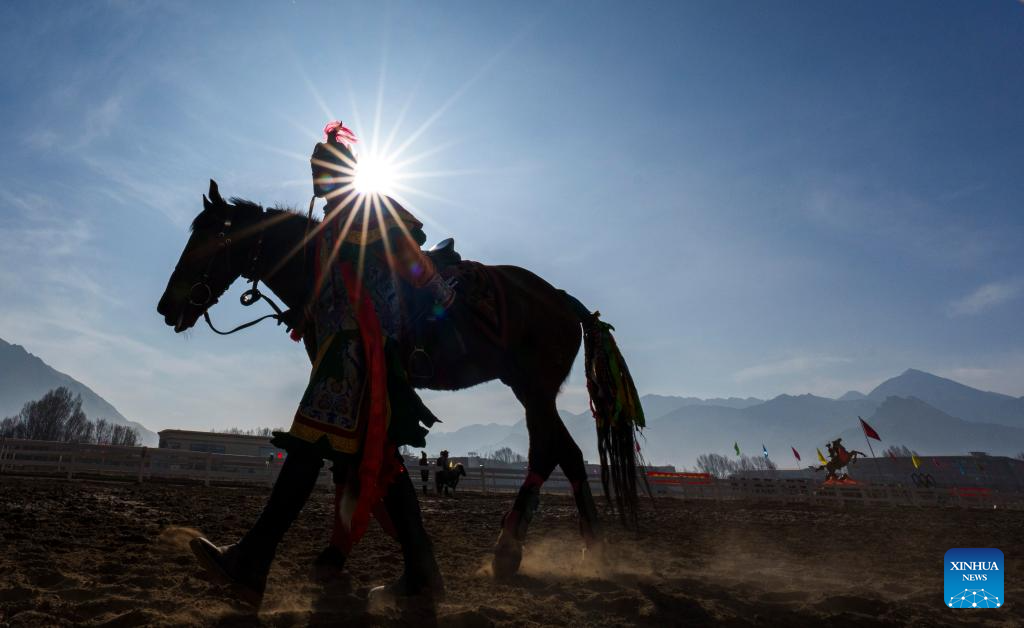
A equestrian performer warms up before the performances in Lhasa, southwest China's Xizang Autonomous Region, Feb. 20, 2026. Monday was the Chinese New Year's Eve, which was just one day earlier than the Night of Gutu of the Tibetan calendar this year, the prelude to the Tibetan New Year, or Losar, the most important festival in the Tibetan calendar.
Losar is a time for family reunions. It is marked by religious rituals, long prayers, horse racing, family gatherings and feasts.
The city of Lhasa hosted ethnic equestrian performances and horse racing on Friday, the fourth day of the Year of the Horse, and also the third day of the Tibetan New Year, showcasing superb traditional skills and offering visual enjoyment to the audience. (Xinhua/Tenzin Nyida)
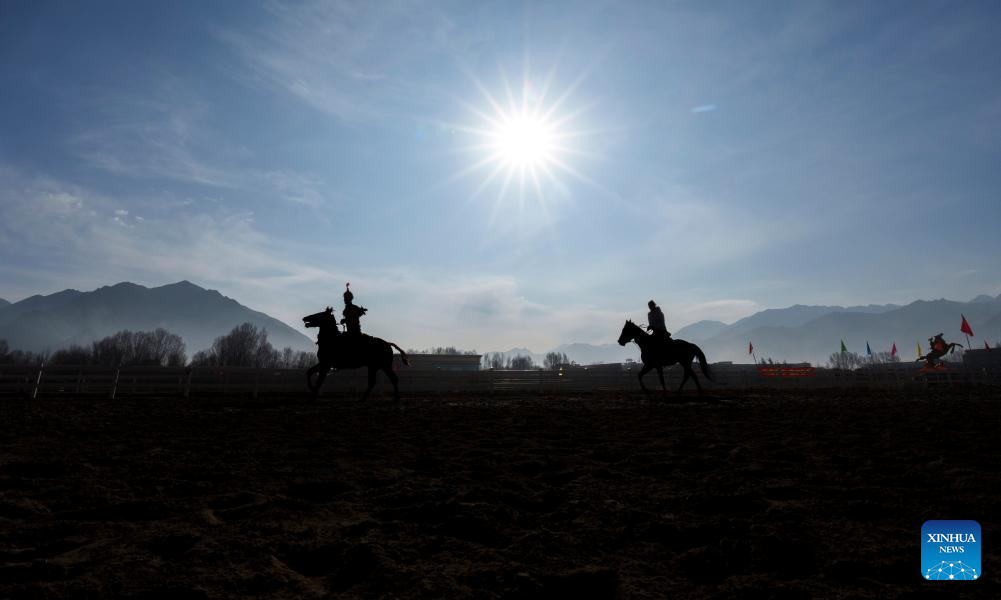
Equestrian performers warm up before the performances in Lhasa, southwest China's Xizang Autonomous Region, Feb. 20, 2026. Monday was the Chinese New Year's Eve, which was just one day earlier than the Night of Gutu of the Tibetan calendar this year, the prelude to the Tibetan New Year, or Losar, the most important festival in the Tibetan calendar.
Losar is a time for family reunions. It is marked by religious rituals, long prayers, horse racing, family gatherings and feasts.
The city of Lhasa hosted ethnic equestrian performances and horse racing on Friday, the fourth day of the Year of the Horse, and also the third day of the Tibetan New Year, showcasing superb traditional skills and offering visual enjoyment to the audience. (Xinhua/Tenzin Nyida)
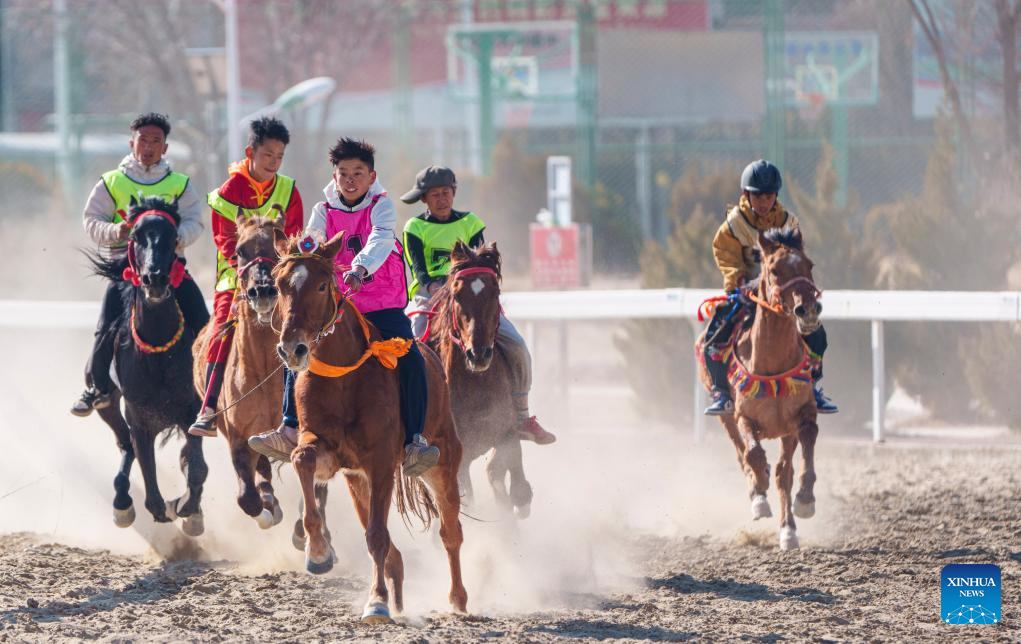
Horse riders compete during a 2,000-meter race in Lhasa, southwest China's Xizang Autonomous Region, Feb. 20, 2026. Monday was the Chinese New Year's Eve, which was just one day earlier than the Night of Gutu of the Tibetan calendar this year, the prelude to the Tibetan New Year, or Losar, the most important festival in the Tibetan calendar.
Losar is a time for family reunions. It is marked by religious rituals, long prayers, horse racing, family gatherings and feasts.
The city of Lhasa hosted ethnic equestrian performances and horse racing on Friday, the fourth day of the Year of the Horse, and also the third day of the Tibetan New Year, showcasing superb traditional skills and offering visual enjoyment to the audience. (Xinhua/Tenzin Nyida)
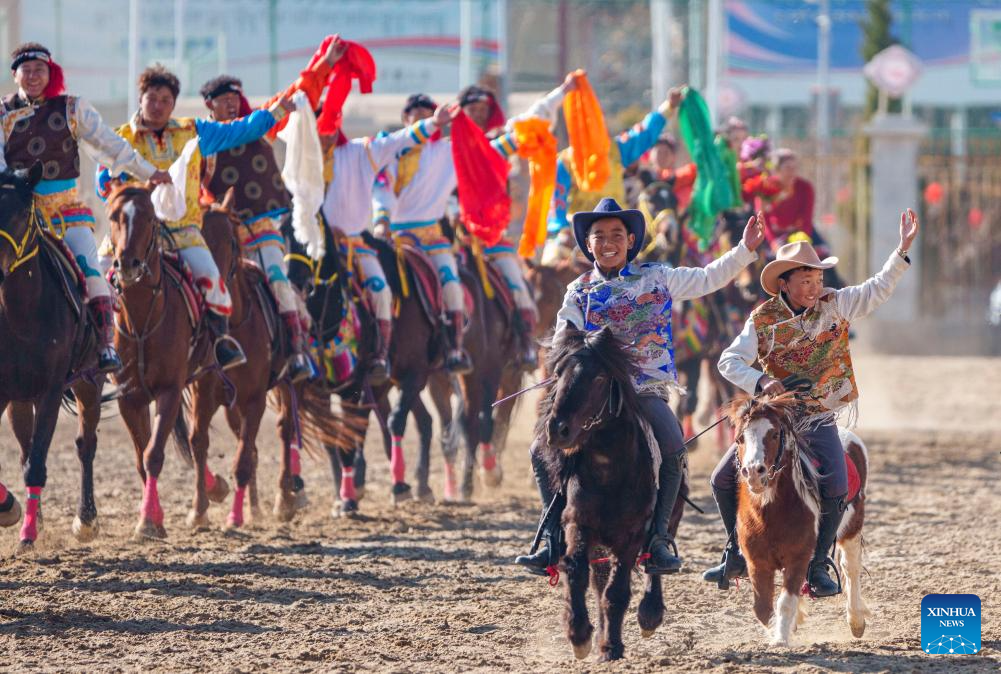
Equestrian performers greet the audience before the performances in Lhasa, southwest China's Xizang Autonomous Region, Feb. 20, 2026. Monday was the Chinese New Year's Eve, which was just one day earlier than the Night of Gutu of the Tibetan calendar this year, the prelude to the Tibetan New Year, or Losar, the most important festival in the Tibetan calendar.
Losar is a time for family reunions. It is marked by religious rituals, long prayers, horse racing, family gatherings and feasts.
The city of Lhasa hosted ethnic equestrian performances and horse racing on Friday, the fourth day of the Year of the Horse, and also the third day of the Tibetan New Year, showcasing superb traditional skills and offering visual enjoyment to the audience. (Xinhua/Tenzin Nyida)
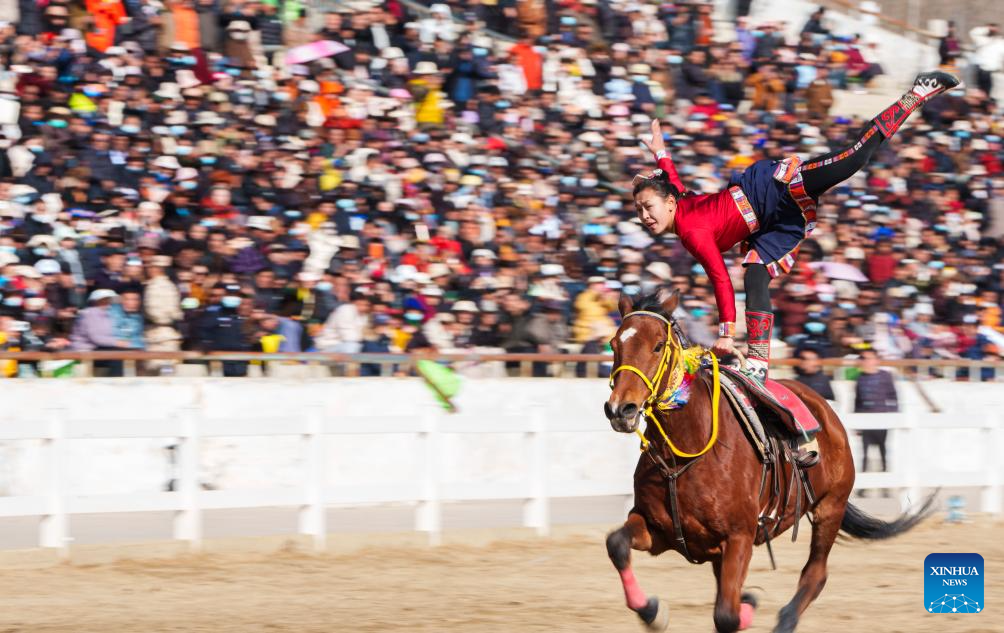
An equestrian performer puts on a show in Lhasa, southwest China's Xizang Autonomous Region, Feb. 20, 2026. Monday was the Chinese New Year's Eve, which was just one day earlier than the Night of Gutu of the Tibetan calendar this year, the prelude to the Tibetan New Year, or Losar, the most important festival in the Tibetan calendar.
Losar is a time for family reunions. It is marked by religious rituals, long prayers, horse racing, family gatherings and feasts.
The city of Lhasa hosted ethnic equestrian performances and horse racing on Friday, the fourth day of the Year of the Horse, and also the third day of the Tibetan New Year, showcasing superb traditional skills and offering visual enjoyment to the audience. (Xinhua/Tenzin Nyida)
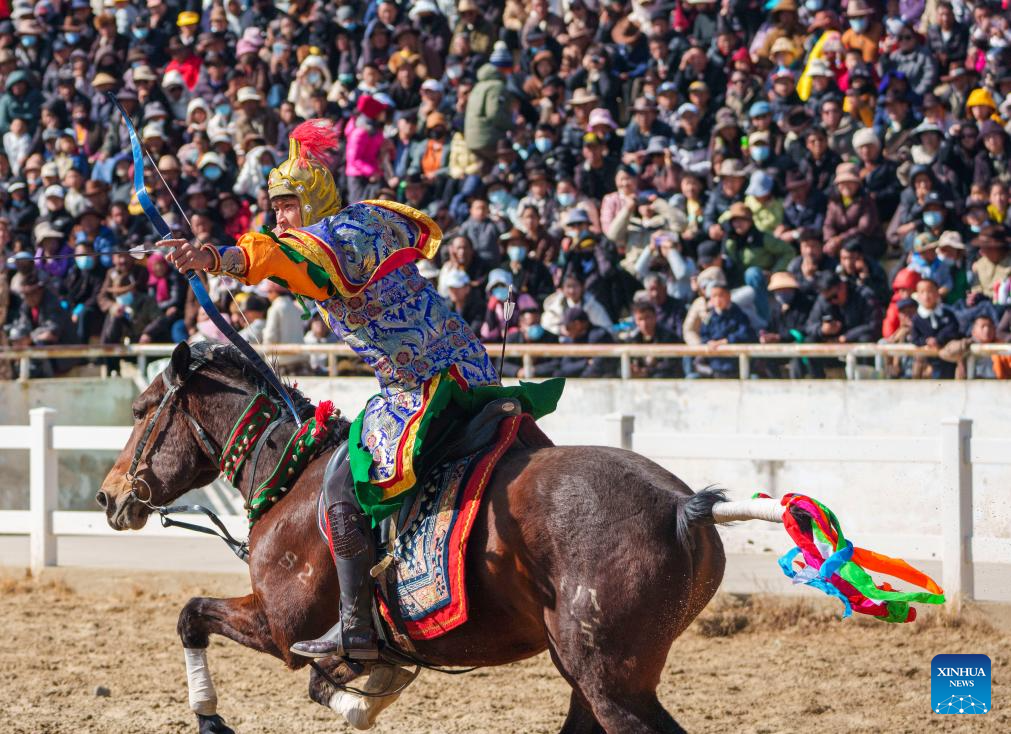
An equestrian performer puts on a show in Lhasa, southwest China's Xizang Autonomous Region, Feb. 20, 2026. Monday was the Chinese New Year's Eve, which was just one day earlier than the Night of Gutu of the Tibetan calendar this year, the prelude to the Tibetan New Year, or Losar, the most important festival in the Tibetan calendar.
Losar is a time for family reunions. It is marked by religious rituals, long prayers, horse racing, family gatherings and feasts.
The city of Lhasa hosted ethnic equestrian performances and horse racing on Friday, the fourth day of the Year of the Horse, and also the third day of the Tibetan New Year, showcasing superb traditional skills and offering visual enjoyment to the audience. (Xinhua/Tenzin Nyida)
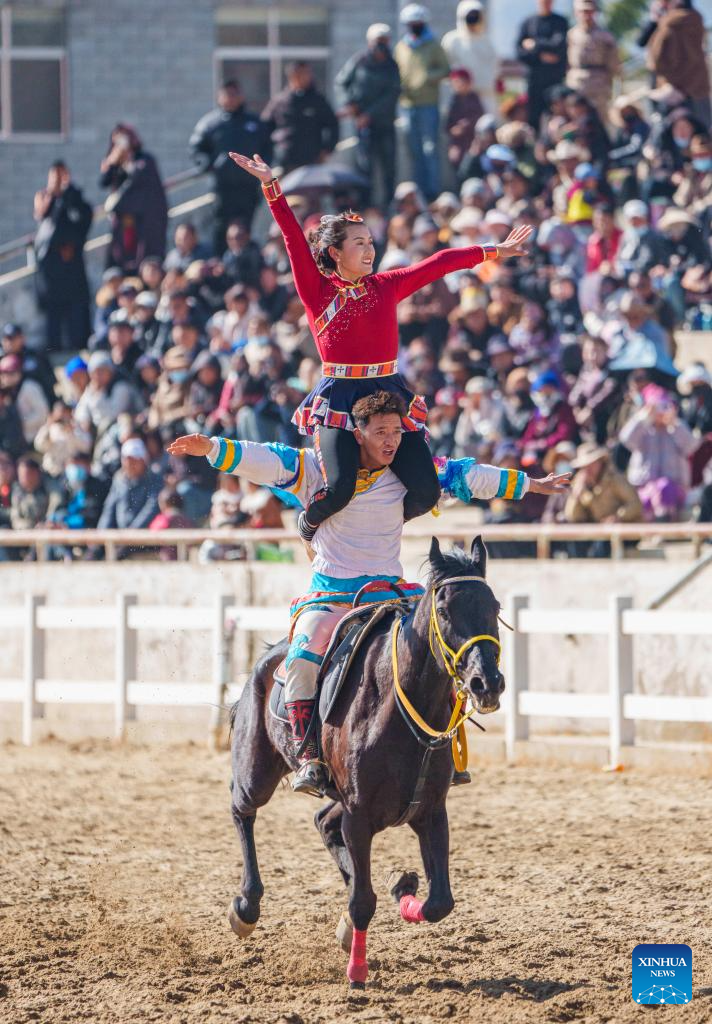
Equestrian performers put on a show in Lhasa, southwest China's Xizang Autonomous Region, Feb. 20, 2026. Monday was the Chinese New Year's Eve, which was just one day earlier than the Night of Gutu of the Tibetan calendar this year, the prelude to the Tibetan New Year, or Losar, the most important festival in the Tibetan calendar.
Losar is a time for family reunions. It is marked by religious rituals, long prayers, horse racing, family gatherings and feasts.
The city of Lhasa hosted ethnic equestrian performances and horse racing on Friday, the fourth day of the Year of the Horse, and also the third day of the Tibetan New Year, showcasing superb traditional skills and offering visual enjoyment to the audience. (Xinhua/Tenzin Nyida)
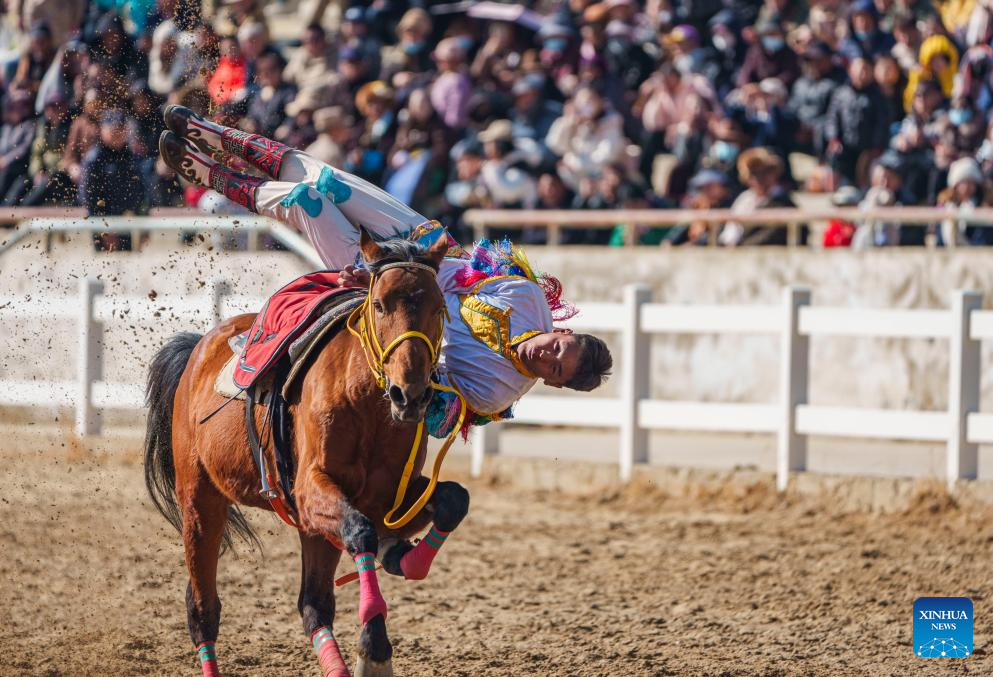
An equestrian performer puts on a show in Lhasa, southwest China's Xizang Autonomous Region, Feb. 20, 2026. Monday was the Chinese New Year's Eve, which was just one day earlier than the Night of Gutu of the Tibetan calendar this year, the prelude to the Tibetan New Year, or Losar, the most important festival in the Tibetan calendar.
Losar is a time for family reunions. It is marked by religious rituals, long prayers, horse racing, family gatherings and feasts.
The city of Lhasa hosted ethnic equestrian performances and horse racing on Friday, the fourth day of the Year of the Horse, and also the third day of the Tibetan New Year, showcasing superb traditional skills and offering visual enjoyment to the audience. (Xinhua/Tenzin Nyida)
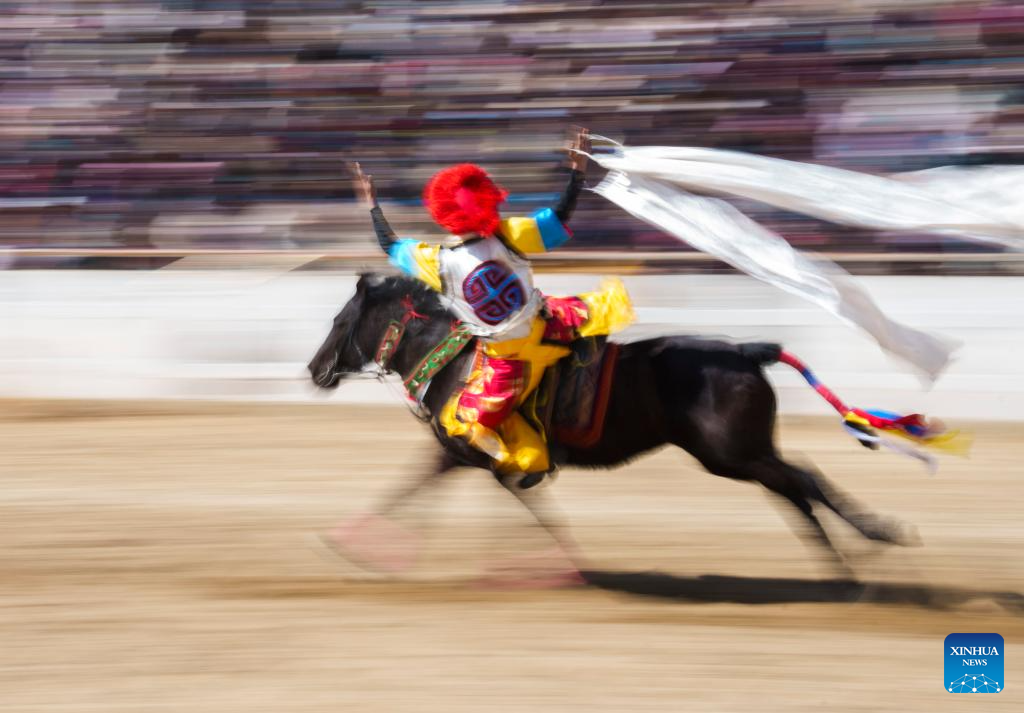
An equestrian performer puts on a show in Lhasa, southwest China's Xizang Autonomous Region, Feb. 20, 2026. Monday was the Chinese New Year's Eve, which was just one day earlier than the Night of Gutu of the Tibetan calendar this year, the prelude to the Tibetan New Year, or Losar, the most important festival in the Tibetan calendar.
Losar is a time for family reunions. It is marked by religious rituals, long prayers, horse racing, family gatherings and feasts.
The city of Lhasa hosted ethnic equestrian performances and horse racing on Friday, the fourth day of the Year of the Horse, and also the third day of the Tibetan New Year, showcasing superb traditional skills and offering visual enjoyment to the audience. (Xinhua/Tenzin Nyida)
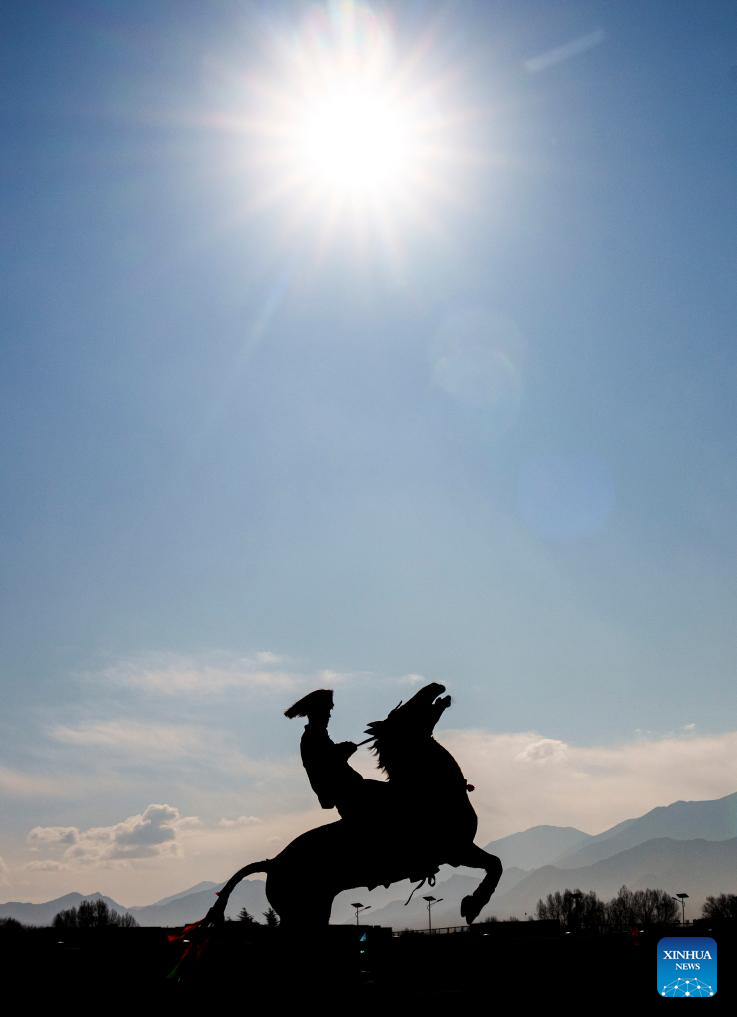
An equestrian performer put on a show in Lhasa, southwest China's Xizang Autonomous Region, Feb. 20, 2026. Monday was the Chinese New Year's Eve, which was just one day earlier than the Night of Gutu of the Tibetan calendar this year, the prelude to the Tibetan New Year, or Losar, the most important festival in the Tibetan calendar.
Losar is a time for family reunions. It is marked by religious rituals, long prayers, horse racing, family gatherings and feasts.
The city of Lhasa hosted ethnic equestrian performances and horse racing on Friday, the fourth day of the Year of the Horse, and also the third day of the Tibetan New Year, showcasing superb traditional skills and offering visual enjoyment to the audience. (Xinhua/Tenzin Nyida)
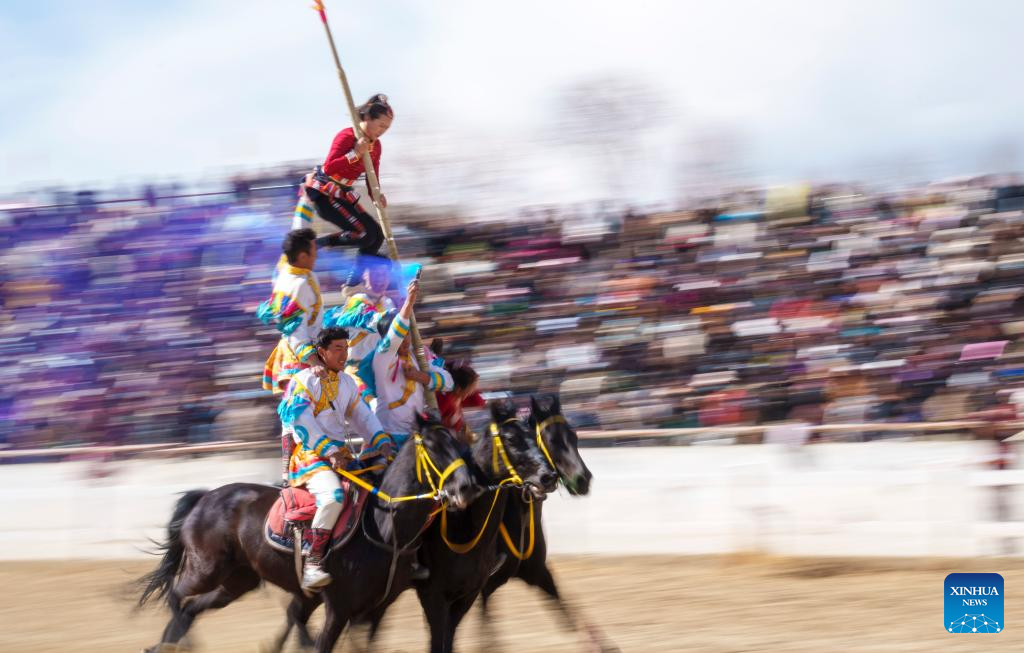
Equestrian performers put on a show in Lhasa, southwest China's Xizang Autonomous Region, Feb. 20, 2026. Monday was the Chinese New Year's Eve, which was just one day earlier than the Night of Gutu of the Tibetan calendar this year, the prelude to the Tibetan New Year, or Losar, the most important festival in the Tibetan calendar.
Losar is a time for family reunions. It is marked by religious rituals, long prayers, horse racing, family gatherings and feasts.
The city of Lhasa hosted ethnic equestrian performances and horse racing on Friday, the fourth day of the Year of the Horse, and also the third day of the Tibetan New Year, showcasing superb traditional skills and offering visual enjoyment to the audience. (Xinhua/Tenzin Nyida)
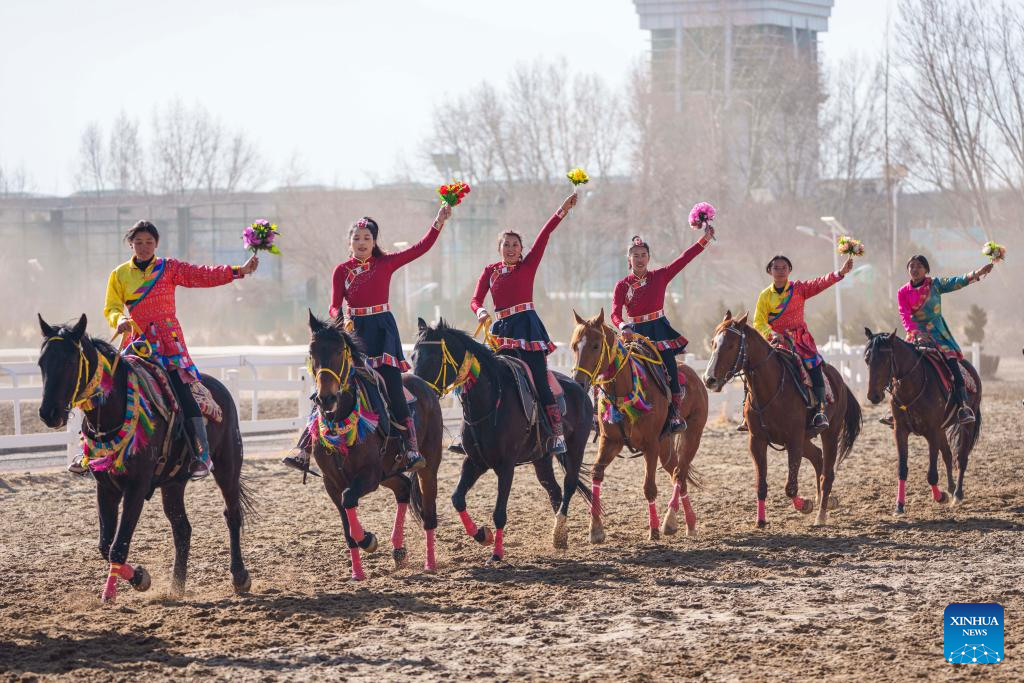
Equestrian performers greet the audience before the performances in Lhasa, southwest China's Xizang Autonomous Region, Feb. 20, 2026. Monday was the Chinese New Year's Eve, which was just one day earlier than the Night of Gutu of the Tibetan calendar this year, the prelude to the Tibetan New Year, or Losar, the most important festival in the Tibetan calendar.
Losar is a time for family reunions. It is marked by religious rituals, long prayers, horse racing, family gatherings and feasts.
The city of Lhasa hosted ethnic equestrian performances and horse racing on Friday, the fourth day of the Year of the Horse, and also the third day of the Tibetan New Year, showcasing superb traditional skills and offering visual enjoyment to the audience. (Xinhua/Tenzin Nyida)
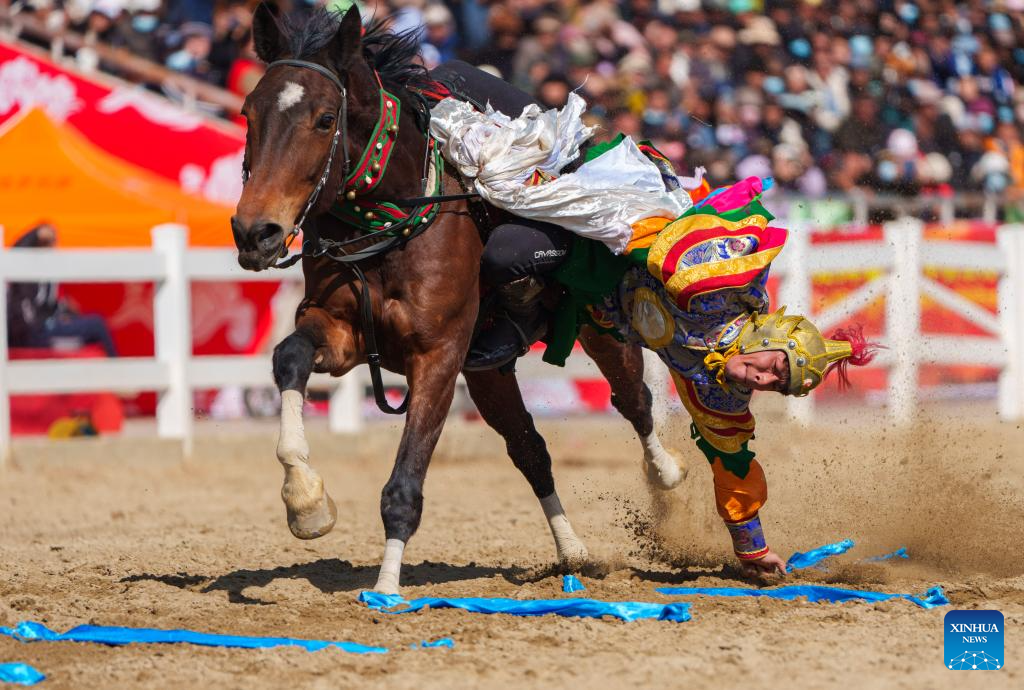
An equestrian performer puts on a show in Lhasa, southwest China's Xizang Autonomous Region, Feb. 20, 2026. Monday was the Chinese New Year's Eve, which was just one day earlier than the Night of Gutu of the Tibetan calendar this year, the prelude to the Tibetan New Year, or Losar, the most important festival in the Tibetan calendar.
Losar is a time for family reunions. It is marked by religious rituals, long prayers, horse racing, family gatherings and feasts.
The city of Lhasa hosted ethnic equestrian performances and horse racing on Friday, the fourth day of the Year of the Horse, and also the third day of the Tibetan New Year, showcasing superb traditional skills and offering visual enjoyment to the audience. (Xinhua/Tenzin Nyida)
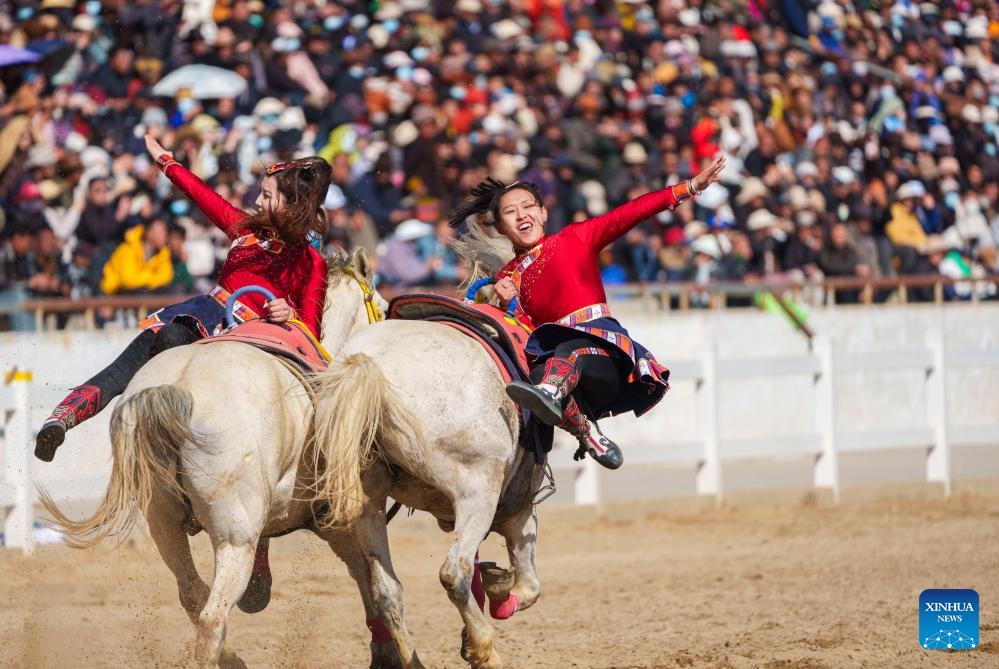
Equestrian performers put on a show in Lhasa, southwest China's Xizang Autonomous Region, Feb. 20, 2026. Monday was the Chinese New Year's Eve, which was just one day earlier than the Night of Gutu of the Tibetan calendar this year, the prelude to the Tibetan New Year, or Losar, the most important festival in the Tibetan calendar.
Losar is a time for family reunions. It is marked by religious rituals, long prayers, horse racing, family gatherings and feasts.
The city of Lhasa hosted ethnic equestrian performances and horse racing on Friday, the fourth day of the Year of the Horse, and also the third day of the Tibetan New Year, showcasing superb traditional skills and offering visual enjoyment to the audience. (Xinhua/Tenzin Nyida)
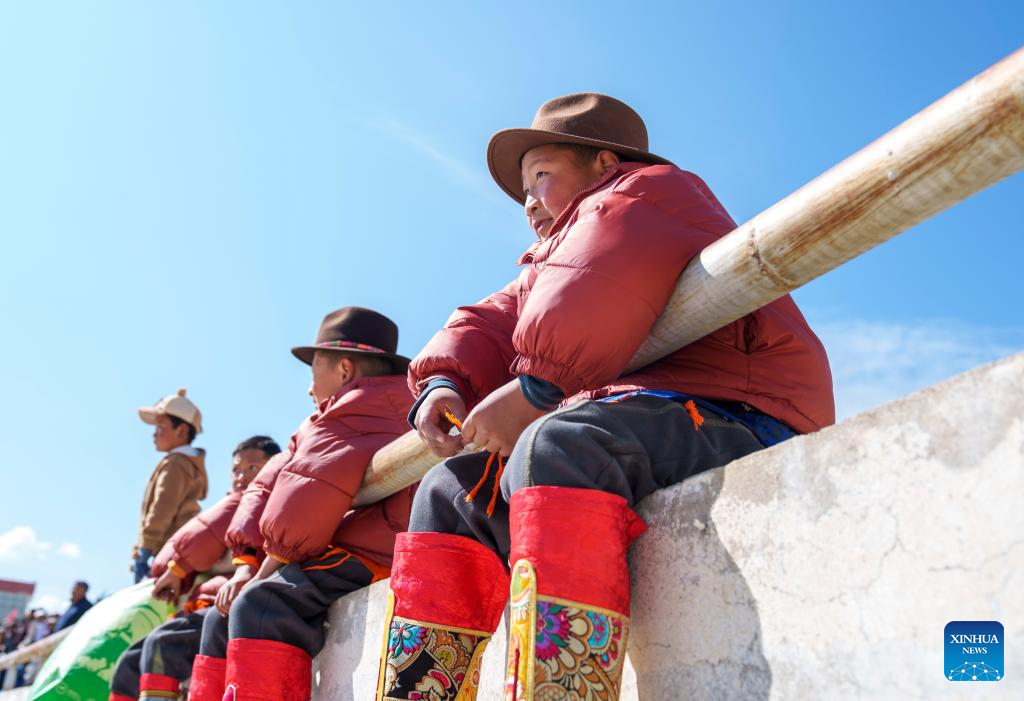
Kids watch the equestrian performances in Lhasa, southwest China's Xizang Autonomous Region, Feb. 20, 2026. Monday was the Chinese New Year's Eve, which was just one day earlier than the Night of Gutu of the Tibetan calendar this year, the prelude to the Tibetan New Year, or Losar, the most important festival in the Tibetan calendar.
Losar is a time for family reunions. It is marked by religious rituals, long prayers, horse racing, family gatherings and feasts.
The city of Lhasa hosted ethnic equestrian performances and horse racing on Friday, the fourth day of the Year of the Horse, and also the third day of the Tibetan New Year, showcasing superb traditional skills and offering visual enjoyment to the audience. (Xinhua/Tenzin Nyida)
Copyright © 2001-2026 湖北荆楚网络科技股份有限公司 All Rights Reserved
互联网新闻信息许可证 4212025003 -
增值电信业务经营许可证 鄂B2-20231273 -
广播电视节目制作经营许可证(鄂)字第00011号
信息网络传播视听节目许可证 1706144 -
互联网出版许可证 (鄂)字3号 -
营业执照
鄂ICP备 13000573号-1  鄂公网安备 42010602000206号
版权为 荆楚网 www.cnhubei.com 所有 未经同意不得复制或镜像