






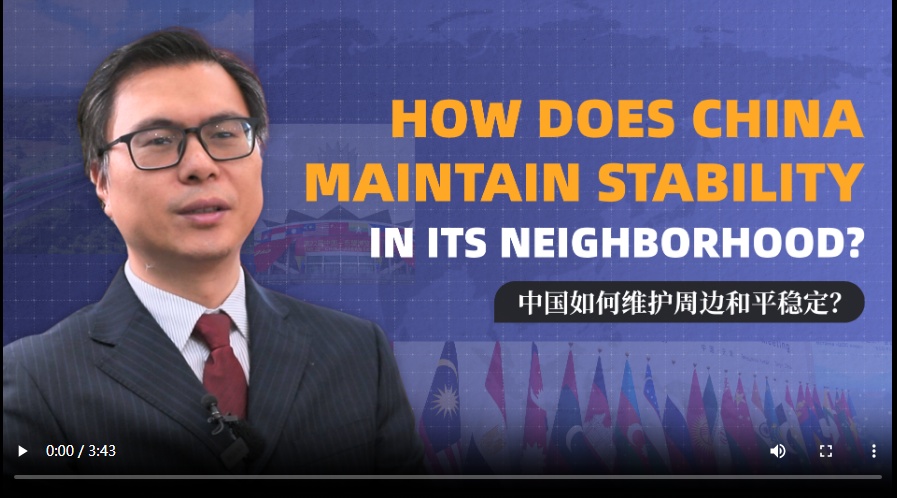
In this episode of China Q&A, Zhang Yongle, dean of the Institute of Studies on Law and Strategy at Peking University, explains how China approaches peace and stability in its neighborhood—through layered, multi-dimensional cooperation and the provision of shared public goods.
He highlights three main pillars: deeper economic integration through frameworks like RCEP and the China-ASEAN Free Trade Area; security coordination via platforms such as the Shanghai Cooperation Organization and the Lancang-Mekong Cooperation mechanism; and financial as well as capacity-building support from institutions like the Asian Infrastructure Investment Bank. Alongside strong people-to-people and cultural exchanges, these efforts have helped build a sense of shared future with 17 neighboring countries by showing how regional stability can be shaped through cooperation rather than zero-sum thinking.
Copyright © 2001-2026 湖北荆楚网络科技股份有限公司 All Rights Reserved
互联网新闻信息许可证 4212025003 -
增值电信业务经营许可证 鄂B2-20231273 -
广播电视节目制作经营许可证(鄂)字第00011号
信息网络传播视听节目许可证 1706144 -
互联网出版许可证 (鄂)字3号 -
营业执照
鄂ICP备 13000573号-1  鄂公网安备 42010602000206号
版权为 荆楚网 www.cnhubei.com 所有 未经同意不得复制或镜像