






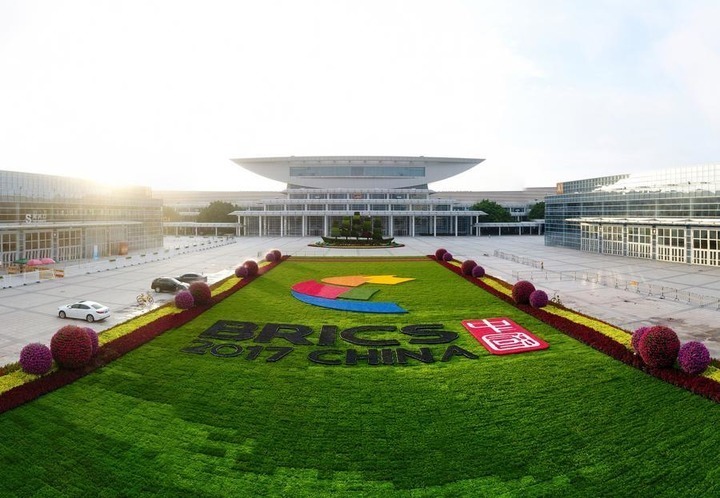
by Xinhua writer Liu Bowei
BEIJING, Sept. 12 (Xinhua) -- When the BRICS cooperation mechanism was formally launched in 2006, it opened a new chapter for cooperation among major emerging economies. Two decades on, BRICS has, through the ebbs and flows of the global economy, expanded through multiple rounds of enlargement and broadened the scope of its cooperation.
This evolution has ushered in a new era of greater BRICS cooperation, better reflecting the growing weight and aspirations of the Global South.
When BRICS leaders prepare to gather for this year's summit in New Delhi, India, the mechanism is playing a greater role in amplifying the collective voice of emerging economies, and expanding practical cooperation amid a changing international landscape beset by raging protectionism and economic fragmentation.
Its growing weight is reflected in its economic and demographic scale. BRICS countries now account for approximately 40 percent of global GDP at purchasing power parity and nearly half of the world's population. Data released by the UN Trade and Development in March showed that the intra-BRICS merchandise trade has expanded more than 13-fold since 2003, and exports reached 1.17 trillion U.S. dollars in 2024.
BRICS, however, is more than an economic force. Its growing significance lies in how countries with different development paths are pooling their strengths in resources, industry and technology to advance shared development.
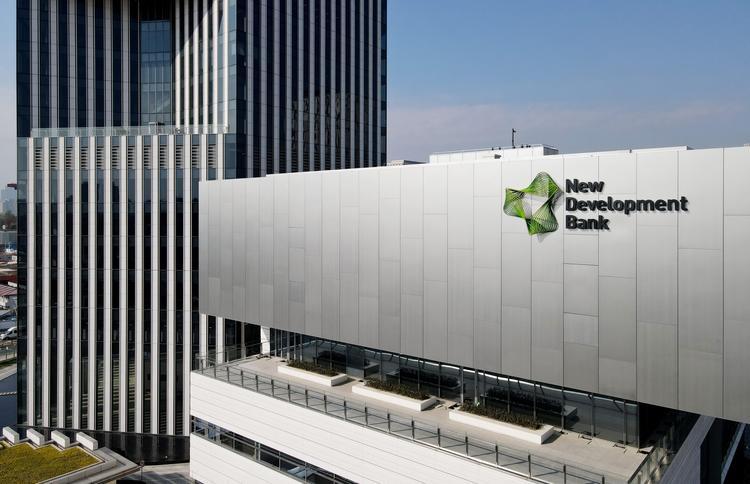
A prominent area is financing. For many developing economies, access to affordable, long-term funding remains critical to turning development ambitions into reality. The New Development Bank (NDB), headquartered in Shanghai, has helped provide such an option by mobilizing resources for infrastructure and sustainable development projects. Figures released by the bank showed that by the end of the first quarter of 2026, the NDB had approved 42.9 billion dollars in financing for 140 projects.
Covering such areas as infrastructure, clean energy and digital transformation, these projects address the pressing development needs of Global South countries while echoing the priorities highlighted by the theme of the forthcoming BRICS Summit, "Building for Resilience, Innovation, Cooperation and Sustainability."
The ever-evolving BRICS cooperation is also helping developing countries gain new growth momentum. In recent years, BRICS cooperation has been expanding into areas like renewable energy, digital infrastructure, scientific and technological innovation.
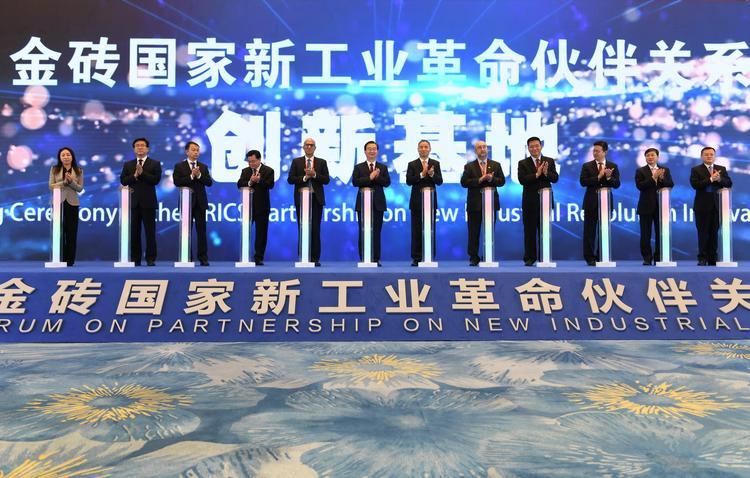
A case in point is the BRICS Partnership on New Industrial Revolution Innovation Center in Xiamen, which was established in 2020 to provide a platform for cooperation in digitalization, advanced manufacturing and technological innovation.
These efforts point to the broader value of BRICS: it is not simply giving the Global South a stronger voice, but creating practical opportunities for countries to access financing, technology and cooperation suited to their development needs.
Such collaboration helps explain BRICS' growing appeal to countries seeking greater opportunities to participate and cooperate. As a founding member, China has contributed not only by building platforms for practical cooperation, but also by supporting greater openness and broader participation to promote high-quality cooperation within an expanded BRICS.
Some in the West portray BRICS as a rival bloc seeking to build a parallel order. Yet this claim bears little resemblance to reality. BRICS stands for openness, inclusiveness and mutual benefit, not confrontation or exclusion. That is fundamentally different from the exclusive blocs championed by some Western countries, and a key reason behind the growing vitality of BRICS.
Looking ahead, BRICS is poised to embark on its third "golden decade" after 20 years of growth and transformation. By rising up to the challenges of the times, BRICS countries can help shape a more equal and orderly multipolar world and a more universally beneficial and inclusive economic globalization, and, in doing so, write a new chapter of solidarity and cooperation across the Global South.
Copyright © 2001-2026 湖北荆楚网络科技股份有限公司 All Rights Reserved
互联网新闻信息许可证 4212025003 -
增值电信业务经营许可证 鄂B2-20231273 -
广播电视节目制作经营许可证(鄂)字第00011号
信息网络传播视听节目许可证 1706144 -
互联网出版许可证 (鄂)字3号 -
营业执照
鄂ICP备 13000573号-1  鄂公网安备 42010602000206号
版权为 荆楚网 www.cnhubei.com 所有 未经同意不得复制或镜像