



“花培工匠”攻克籼稻“芯片”难关
An Agronomist Overcomes the Major Difficulty of Raising Indica Rice
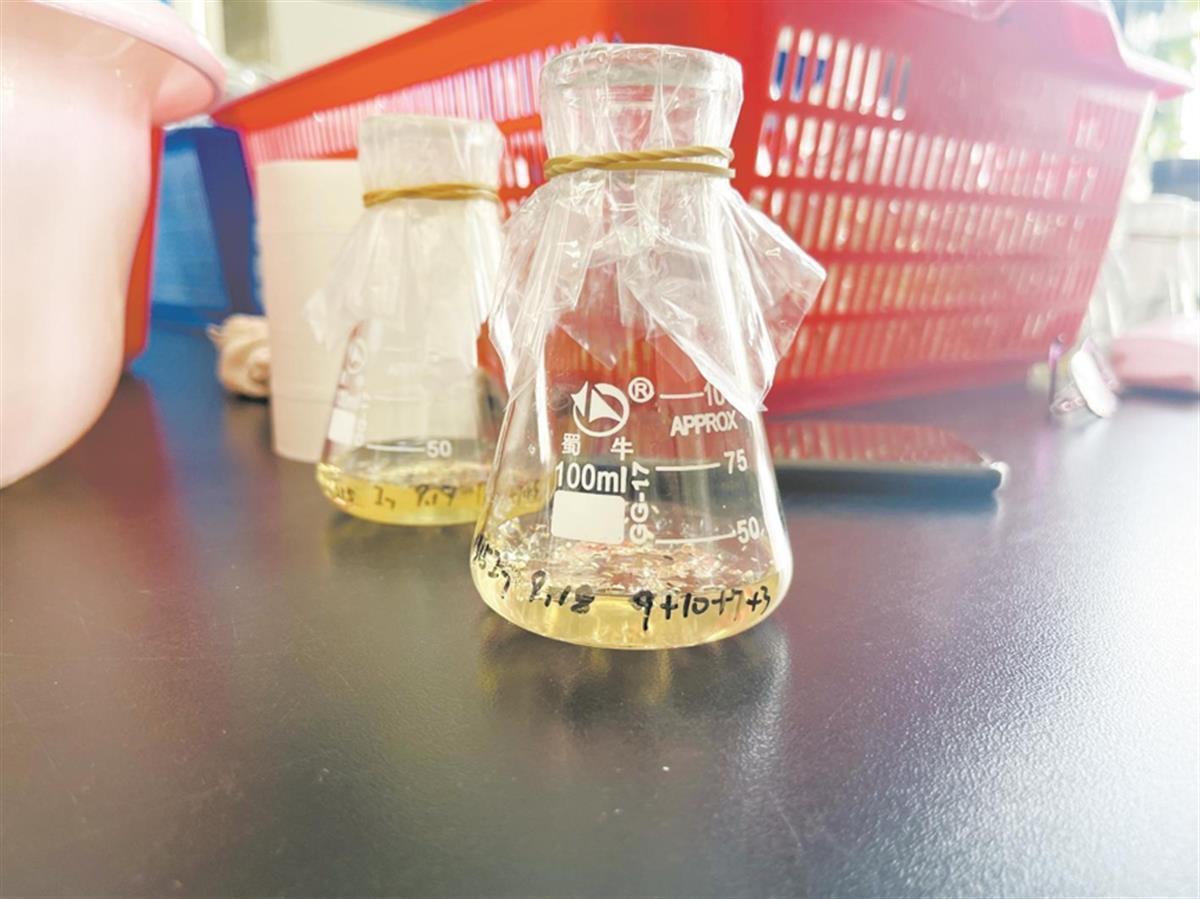
李三和的宝贝 The Treasure of Li Sanhe
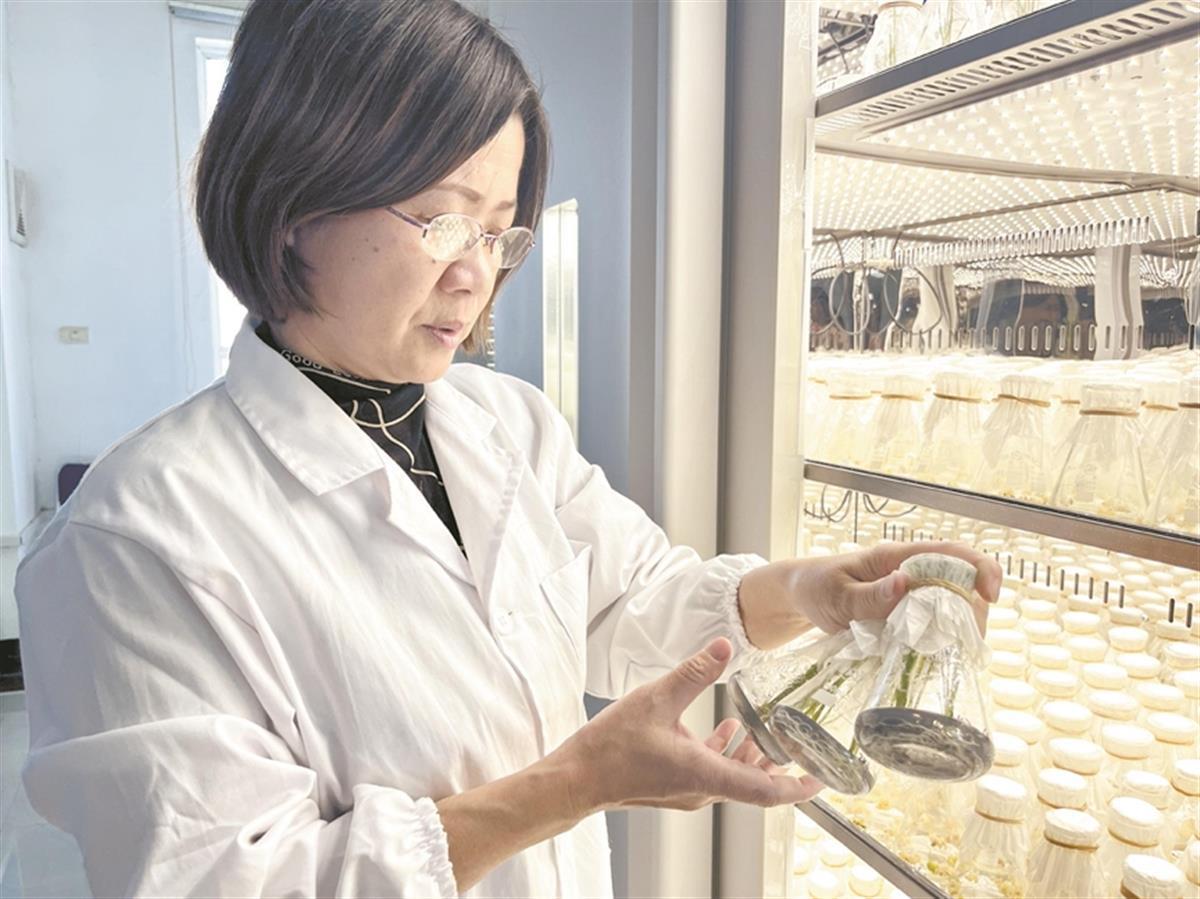
李三和在工作中 Li Sanhe in work 摄影:楚天都市报极目新闻记者李碗容 Photographer: Li Wanrong (Jimu News reporter)
楚天都市报极目新闻记者 李碗容 实习生 丁榕 通讯员 谢娅 杨文
Jimu News Reporter: Li Wanrong
Intern: Ding Rong
Correspondents: Xie Ya, Yang Wen
翻译:佟洁馨 王嘉伟 马泳斐 (湖北大学)
Translators: Tong Jiexin, Wang Jiawei, Ma Yongfei(Hubei University)
她曾是化学老师,后读研读博。进入湖北省农业科学院后,她从洗瓶子做起,十余年只研究花药培养这一件事。她就是省农科院粮食作物研究所49岁的李三和副研究员。
She used to be a chemistry teacher, and then obtained her master"s and doctoral"s degree. After employed by Hubei Academy of Agricultural Sciences, she started her work from washing bottles to simply studying anther culture for decades. This is the lady, Li Sanhe, 49, who is now an associate researcher at the Institute of Food Crops, Hubei Academy of Agricultural Sciences.
十年磨一剑,经过不断的尝试和探索,近来李三和终于突破了籼稻花药培养力低下的瓶颈,建立了高效的’籼稻花药培养技术体系,弥补了传统育种效率低的短板,相关成果达国际领先水平,被业界广泛认可。
After continuous attempts and explorations for ten years, Li Sanhe finally made major breakthroughs of the bottleneck issue in raising anther of indica rice and established an efficient cultivation system of indica rice, which made up for the low efficiency of traditional breeding methods. Relevant achievements took the lead at international level and were widely recognized by the industry.
如今,“花培工匠”成了她的代名词。依托这一技术,她参与育成的12个水稻新品种在全国大面积推广,前来咨询和学习的人越来越多,她毫不吝啬将籼稻花培技术传播给更多的人,助力中国碗装中国粮。
Nowadays, “Master of Anther culture” becomes her distinctive title. Based on this technique, the 12 new rice species she has participated in breeding have been widely promoted in the country. More and more people have come to consult and learn from her. She taught them how to raise indica rice generously so as to assist more Chinese people with eating Chinese-made rice.
冬去海南夏返武汉
Visiting Hainan in winter and returning to Wuhan in summer
跨过籼稻育种效率低下难关
Overcoming inefficiency in indica breeding
11月1日,极目新闻记者走进粮食作物研究所植物细胞工程实验室,一头干练短发的李三和正认真观察着试验瓶内水稻苗的生长状况。实验室陈列着十余个光照培养箱,里面摆放着李三和的宝贝。“我每天来实验室,最开心的就是看到这些瓶子。”李三和说。
On November 1st, a Jimu News reporter visited the plant cell engineering laboratory of the Institute of Food Crops, seeing short-haired Li Sanhe carefully observing the growth of rice seedlings in the experiment flask. A dozen of illumination incubators with Li Sanhe"s treasures were displayed in the lab. “The happiest thing for me is to see these flasks in the lab every day.” Li Sanhe said.
打开实验室的一个光照培养箱,极目新闻记者看到了她口中的瓶子——近500个100毫升的三角瓶整齐摆放在培养箱里,有的瓶中是花药刚培养出来的愈伤组织,它们被摆放在瓶底的四周,黄色的愈伤组织如同一颗颗小米,不少愈伤组织上冒出了绿点;有的瓶子里长出了水稻嫩苗,瓶底还盘踞着一团白色的须根。
The reporter opened one of the illumination incubators, and saw the flasks she mentioned. Nearly 500 triangular flasks of 100 ml were placed in order in the incubator. At the bottom of some flasks were the newly grown anther callus, the yellow calluses was just like millet grains, and many of them had even sprouted. Some of the flasks had grown rice seedlings, and there was a mass of white fibres roots at the bottom of those flasks.
在水稻抽穗开花前将水稻穗取回,未绽放的花朵中就生长着花药。花药培养技术就是把发育到一定阶段的花药,通过无菌操作技术,接种在人工培养基上,以改变花药内花粉粒的发育程序,诱导其分化,并连续进行有丝分裂,形成细胞团,进而形成愈伤组织,随后使愈伤组织分化成完整的植株。
The rice panicles are taken back before they blossom, and the anthers grow in the unbosomed flowers. The anther culture technique is to inoculate anthers that have grown to a certain stage on an artificial culture medium through sterile operation. In this way, the growth of pollen grains contained in the anthers will be changed and they will be induced to differentiate for continuous mitosis into cell clusters and then callus which will be further differentiated into a complete plant.
“种业是国家战略性、基础性核心产业,水稻良种是水稻产业的芯片。”湖北省农科院院长、水稻首席专家游艾青告诉记者,杂交育种后正常田间繁育,一般要8-10代、4-5年才能稳定,而经过花药培养可以直接稳定。但此前籼稻花药培养力一直很低,难以在籼稻育种中应用。
“The seed industry is a core industry at national strategic and fundamental level. Improved rice varieties is the core of the rice industry,” explained by You Aiqing, president of Hubei Academy of Agricultural Sciences and chief rice expert. It usually takes 4 to 5 years and goes through 8 to 10 generations to stabilize field propagation after hybridization, but the anther culture technique can directly stabilize the growth of rice varieties. Before that, the anther culture ability of indica rice used to be too weak to be applied in raising indica rice.
2009年,李三和走上籼稻花药培养技术攻坚之路。为了取到更好的水稻花药组织,李三和如候鸟一般,冬去海南,夏返武汉,穿梭在水稻田选取适合的水稻穗子,烈日炎炎下,汗水湿透衣背、蚊虫浑身叮咬是常态。
In 2009, Li Sanhe embarked on the journey of making breakthroughs in the anther culture technique for indica rice. In order to obtain better rice anther tissue, she went to Hainan in winter and returned to Wuhan in summer, just like a migratory bird. To select suitable rice panicles, she walked through the paddy field in the blazing sun, with sweat streaming down her back and mosquitoes biting her from head to foot.
2018年初,李三和研究的籼稻花药培养技术逐渐成熟。当年3月,一次籼稻花药培养后的出苗率让李三和喜出望外,“我现在都记得,当时一个瓶中放置4到5个愈伤组织,经过培养,一般有2个愈伤组织能长出绿点就很不错了,而那批材料的愈伤组织大部分都能长出绿点,最后的出苗率也很高。”
In early 2018, the anther culture technology of indica rice developed by Li was gradually maturing. In March, Li was overjoyed by the emergence rate of anther in one test, “I can still remember that, it"s not easy to see two calluses sprouted among four or five ones in one bottle after cultivation, but most of the callus in raised in that one sprouted with high rate of emerge eventually.” She told us with delight.
最后经过测算,他们的籼稻花药培养力高达17.55%,是文献报道最高培养力的8倍。2019年,相关技术成果在农业农村部组织的“长江中游优质中籼稻新品种选育与产业化”成果评价会上被专家组评价为“居国际领先水平”。2020年,基于该技术的成果“长江中游优质中籼稻新品种培育与应用”,获国家科技进步二等奖。“团队获奖中一个重要的创新点就是高效的籼稻花药培养技术,缩短了育种周期,提升了育种效率,这个技术非常好,研究粳稻和籼稻都在用这个技术。”游艾青说。
The calculation data showed that the anther culture rate of indica rice is as high as 17.55%, 8 times higher thatn the highest cultivation capacity reported in the related literature. In 2019, related technical achievements were evaluated by panels as “pioneers at international level” in Achievement Evaluation Meeting on Breeding and Industrialization of New-type High Quality Medium Indica Rice Varieties in the Middle Reaches of the Yangtze River. In 2020, “Cultivation and Application of New High Quality Medium Indica Rice Varieties in the Middle Reaches of the Yangtze River” based on that technology won the second prize of National Science and Technology Progress Award. “As a vital innovative part for the prize, the efficient technology cut down the breeding cycle, and enhanced its effect. It is so good and now is used for the research of japonica rice and indica rice.” You Aiqing said.
加班加点抢抓水稻培育期
Working overtime to seize the rice cultivation period
助育种专家研发12个新品种
Helping specialists to develop 12 new varieties
2022年,湖北省农科院又一优质籼稻新品种“润香玉”通过审定,水稻花药培养技术同样作出了重大贡献。此前李三和已经参与育成11个水稻新品种,广两优272被农业部认定为超级稻品种,广两优5号和广两优272转让费分别达188万元和402万元。这些都让李三和十分欣慰。
In 2022, “Runxiangyu”, another new high-quality indica rice variety cultivated by Hubei Academy of Agricultural Sciences, was approved. Before that, Li Sanhe has participated in developing 11 rice new varieties, among which “Guangliangyou 272” (a kind of Indica two-line hybrid rice) was listed as super rice variety by Ministry of Agriculture. The transfer fees of “Guangliangyou 5” and “Guangliangyou 272” show are 1.88 million yuan and 4.02 million yuan respectively. Li felt gratified with all these results.
“李老师是个风风火火的人,做事麻溜,效率很高,给大家帮了很多忙。”粮食作物研究所副研究员刘凯说。2014年到此参加育种工作以来,每年李三和都帮刘凯做大量花药培养试管苗,今年她又协助刘凯做了2000多瓶。11月下旬,刘凯将带着它们前往海南开展下一步南繁育种工作。
Liu Kai, an associate researcher in Institute of Food Crops, said that: “ Li reacts so quickly to everthing occured to her. She works efficiently and helped us a lot.” Since he dedicated to rice breeding, Li Sanhe helped him to make a large number of in vitro plantlets of anther culture every year, and she has assisted Liu with over 2000 flasks this year, which will later be taken by Liu to Hainan Province for breeding in the south.
由于水稻育种的特殊性,花药培养技术也要抢时间。李三和总是在水稻抽穗前就开始忙,得到水稻幼穗后,要在8到12天处理完,超过15天水稻材料便报废。每年五一期间和十一期间,李三和一头扎进实验室。今年十一,她在实验室待满了七天。这其实是她秋季的工作常态,从8月一直持续到11月,李三和已连续忙碌数月,周末也没时间休息。“经常看到李老师很晚还在实验室,也经常赶不上饭点。”刘凯说。
The speciality of rice breeding makes it sensitive to time of anther culture. Li always starts her work before rice heading, and she needs to finish her work within 8 to 12 days after gaining young panicles of rice, because the materials would not be useful after 15 days. Li usually spends all her time in laboratory every Labour Day and National Day holiday, so does she this year during National Day holiday. It"s actually her routine work every fall. Li has worked for months from August to November without rest even at weekends. Liu said, “ Ms Li is often seen working late in the Lab even without dinner.”
处理水稻材料也是很精细的活,要先将材料用次氯酸钠浸泡20分钟。洗净后用滤纸吸干水,左手用镊子夹着幼嫩的水稻壳,右手拿剪刀从壳子底部剪开一个口子,再用镊子夹住壳子顶部,将其中的花药抖落到培养基中。这些都要保证在无菌环境下进行操作。处理过后的幼穗不能过夜,因此李三和经常吃过晚饭后又回到实验室继续做。
It requires delicate work to deal with rice materials. Soak the materials in sodium hypochlorite for 20 minutes first. After washing, use filter paper to absorb water. Use tweezers to hold the tender rice shell with the left hand. Use scissors to cut a hole from the bottom of the shell with the right hand. Then use tweezers to hold the top of the shell and shake the anthers into the cultivation medium. These steps should be down in a sterile environment. The young ears after treatment can"t stay overnight, as a result, Li Sanhe often returns to the laboratory to continue her work after dinner.
“可能是我要求高,也可能是我贪心,我想出的苗子更多更好。”李三和打趣道。为了实现自己的“贪心”,李三和总是自觉地加工作量。记者在她的实验台上看到一本泛黄的笔记本,密密麻麻地写满了她从2015年以来每次花药培养的数据,每个数据她都进行了详细分析。
“Maybe I"m too demanding or greedy, but I want more and better seedlings.” Li Sanhe said jokingly. In order to fulfill her “greed”, she is always overloaded with work. The reporter saw a yellowing notebook on her experiment table, densely filled with data on each anther culture since 2015 with detailed analysis.
“662、10.28、I3、8 6……”实验室每个试验瓶的下方都写有一串内容,其中有材料编号、日期、培养基编号等。“因为每年材料都在变,更要探索出更多提升花药培养效率的相关影响因素。”李三和介绍。因此她详细记录下实验中的各类数据,尤其是培养基数据,今年秋季李三和就在不同阶段各研究了3种不同成分的培养基,对其一一做了记录,同时观测培养基效果。
“662, 10.28, I3, 8 6...”A string of contents are written below each flask in the laboratory, including the material number, date, medium number, etc. “Since the materials are different every year, we need to find out more relevant factors which can improve the efficiency of anther culture.” Li Sanhe said. Therefore, she recorded a variety of data in the experiment in detail, particularly the data of culture medium. This fall, Li Sanhe did research on, recorded and observed 3 kinds of mediums with different ingredients at different stages.
洗瓶子洗出名堂来
Major discoveries after flask washing
同行纷纷前来取经
Peers coming for lessons
“她10余年就埋头专注于一件事,发挥工匠精神做研究。如今是‘花培工匠’‘花培之花’,在籼稻花药培养技术上国内没人比她做得好,她掌握了独门绝活。”作为李三和的引路人,游艾青十分欣赏她。
“She has devoted herself to one thing for more than 10 years, giving full play to the spirit of craftsmanship for her research. Now she is a master and a star of flower culture. No one in China does better than her in indica rice anther culture. She has mastered a unique skill.” Leading the way of Li Sanhe, You Aiqing appreciates her very much.
然而人生前半段,李三和过着完全不一样的生活。1996年,李三和从华中师范大学毕业,回到家乡湖南益阳成为一名化学老师。1997年,李三和步入婚姻殿堂成为一名军嫂。2001年,为了家人团聚和自我提升,她考入华中科技大学攻读硕士,2003年又开始攻读博士。2007年博士毕业后,李三和来到湖北省农科院粮食作物研究所工作。本科学的化学,硕博才转入生物学领域,读博期间做的也是小麦育种工作,这让她在能人聚集的水稻研究领域一时无所适从。
However, in the first half of her life, she lived a completely different life. In 1996, she graduated from Central China Normal University and returned to her hometown Yiyang of Hunan province, to become a chemistry teacher. In 1997, She got married with a serviceman. In 2001, for the sake of family reunion and self-improvement, she was admitted to Huazhong University of Science and Technology for a master"s degree, and began to study for a PhD in 2003. After her graduation in 2007, Li Sanhe got a job in the Institute of Food Crops, Hubei Academy of Agricultural Sciences. She learned chemistry during undergraduate study but turned to biology for her master degree and doctoral degree. During the time of PhD study, she focused her research on wheat breeding, which made her even at a loss in the rice research field which is filled with able scholars.
李三和选择迎难而上。她认真学习更多水稻知识,跟着同事下田收种子,在实验室帮忙做研究。“第一次到田地收种,看到田地里参差不齐的水稻很不理解,我们家乡的水稻都是一马平川。”李三和笑着说。如今,看着田里高低不一的水稻,李三和却是了然于胸,她知道这些水稻中也许就有培育成功的优良品种。
Li chose to rise to the challenge. She earnestly learned more knowledge about rice culture, harvested seeds in the field with her colleagues, and helped to do research in the laboratory. “For the first time I went to the field for seeds harvest, I didn"t understand why the rice in the field grew unevenly since the rice fields in my hometown were all flat.” Li Sanhe said with a smile. Today, She is very clear about the reason when looking at the rice varieties in different heights in the field. She knows that some excellent varieties may have been successfully cultivated among these rice varieties.
植物细胞工程实验室最多的就是实验瓶,极目新闻记者看到水池中放着不少刚使用完要清洗的实验瓶。李三和拿起瓶子熟练地清洗起来,“这是我们这个实验室最简单的活,谁来了都会做。”李三和最初就是从最简单的洗瓶子做起。“年轻人做研究一定要脚踏实地,洗瓶子是很简单,但李三和洗瓶子还洗出名堂来,没辜负我的一番苦心。”游艾青说道。他告诉记者,团队每个人掌握一门独门绝活,科研的每个节点上都有做得很好的人,这样就可以更系统科学有组织地开展水稻育种工作,整体水平也会提升。
Experimental bottles are of the largest amount among items in the plant cell engineering laboratory. JIMU News reporter saw many experimental bottles that have just been used and need to be cleaned in the pool. Li Sanhe picked up the bottles and cleaned them deftly, and she said “This is the simplest job in our laboratory. Anyone who comes knows how to do it.” Li Sanhe started with the simplest bottle washing. “Young people must be down-to-earth when doing research. Washing bottles is very simple, but Li Sanhe made a success as a bottle washer. She didn"t fail me” You Aiqing said. He told the reporter that everyone in the team has a unique skill, and there are people who have done well at every part of the research, so that rice breeding can be carried out more systematically and scientifically, therefore the overall level will also be improved.
如今李三和已是花药培养领域的行家,湖南省知名的华智生物、中科院遗传与发育生物学研究所、华中农业大学等同行都纷纷前来交流。每年,李三和也抽出一部分时间协助中科院等单位培育做研究所需的特殊试管苗。
Now Li Sanhe has become an expert in the field of anther culture. Peers from Higentec, a famous company in Hunan Province, Institute of Genetics and Developmental Biology of Chinese Academy of Sciences, Huazhong Agricultural University and other related institutions came to exchange ideas with her. Every year, she would also take some of her time to help Chinese Academy of Sciences and other institutions with cultivateion of special in vitro plantlets for research.
“我始终认为可以做得更好。”李三和告诉记者,她会继续在水稻花药培养技术上前进,为中国碗装中国粮贡献自己的力量。
“I always believed that I could do better.” Li Sanhe told reporters that she would continue to make progress in rice anther culture and make her contribution to the goal of filling Chinese bowls with Chinese rice.
Copyright © 2001-2025 湖北荆楚网络科技股份有限公司 All Rights Reserved
互联网新闻信息许可证 4212025003 -
增值电信业务经营许可证 鄂B2-20231273 -
广播电视节目制作经营许可证(鄂)字第00011号
信息网络传播视听节目许可证 1706144 -
互联网出版许可证 (鄂)字3号 -
营业执照
鄂ICP备 13000573号-1  鄂公网安备 42010602000206号
版权为 荆楚网 www.cnhubei.com 所有 未经同意不得复制或镜像